This technical guide defines the manufacturing standard for office-ready leggings. We analyze the critical specs—from high-GSM Ponte Roma fabric and faux fly construction to no-roll waistband engineering—to ensure you can develop a premium, low-return product line.
Matte Finishes vs. Gym Shine
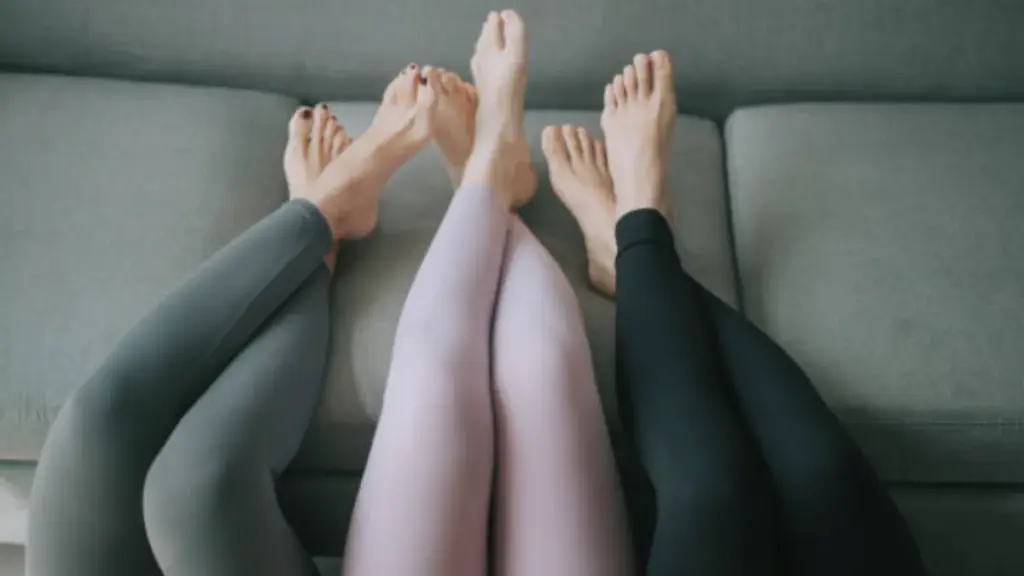
Matte finishes offer a sophisticated, low-reflection look for ‘workleisure’ pants. ‘Gym shine’ is the high-sheen, athletic look of performance fabrics better suited for the gym.
Defining the Aesthetic for Work and Workout
A matte finish absorbs light, creating a non-reflective, textured surface. This gives apparel an understated and sophisticated appearance that makes “workleisure” styles blend into a professional setting. It’s the opposite of the high-gloss, satin-like finish typical of performance fabrics like nylon/spandex blends.
That ‘gym shine’ reflects light and signals a distinctly athletic purpose. Customer perception is straightforward: matte textures are associated with premium, versatile apparel, while high-shine finishes are linked directly to dedicated workout gear.
Fabric and Manufacturing Considerations
The final surface sheen starts with the raw materials. The choice of yarn and knit—like using a Ponte Roma or brushed nylon versus a standard Interlock—directly impacts the look. Beyond the initial fabric choice, factories can alter the surface through mechanical processes like brushing or sueding, which disrupt light reflection to achieve a matte effect.
Don’t assume matte fabrics compromise on performance. While a natural sheen is common in many durable, moisture-wicking synthetics, modern textile engineering allows for high-performance matte fabrics that retain all their technical capabilities. You can get the office-appropriate look without sacrificing function.
Pockets, Belt Loops, & Faux Fly
How do you successfully dress up yoga pants for work? It all comes down to the deceptive details. Your customers want the freedom of stretch fabric, but they need the visual cues of tailored trousers.
| Component | Specification & Purpose |
|---|---|
| Aesthetic Integration | A faux fly creates the visual structure of business trousers, not leggings. |
| Functional Hardware | Belt loops provide a polished look and allow for a customized fit. |
| Core Fabric Blend | An 87% Nylon / 13% Elastane mix offers stretch, structure, and opacity. |
| Construction Detail | Pockets use structured lining to lie flat without gaping or adding bulk. |
Blending Office Aesthetics with Activewear Comfort
The entire point is to make them look like anything but yoga pants. A faux fly provides the classic silhouette of business slacks, immediately distinguishing them from simple leggings. Functional front and back pockets are deep enough for actual use, mimicking traditional trousers. The addition of sturdy belt loops is the final step, allowing for a belt to create a more professional and put-together appearance.
Material and Construction Specifications
You can’t just sew a zipper onto a pair of leggings. Successfully integrating these structured features into a high-stretch fabric requires specific engineering.
- Fabric Composition: The material must be a high-stretch, opaque blend like 87% Nylon and 13% Elastane. This gives the necessary comfort while providing enough structure to avoid a “gym” look.
- Pocket Construction: Pockets are built with a structured lining that forces them to lie flat. This prevents the gaping and bulging that would otherwise occur on a form-fitting garment.
- Reinforced Stitching: All high-stress points, particularly belt loops and pocket seams, need reinforced stitching to handle the pull and stretch of daily wear without failing.
Ponte Roma vs. Brushed Nylon
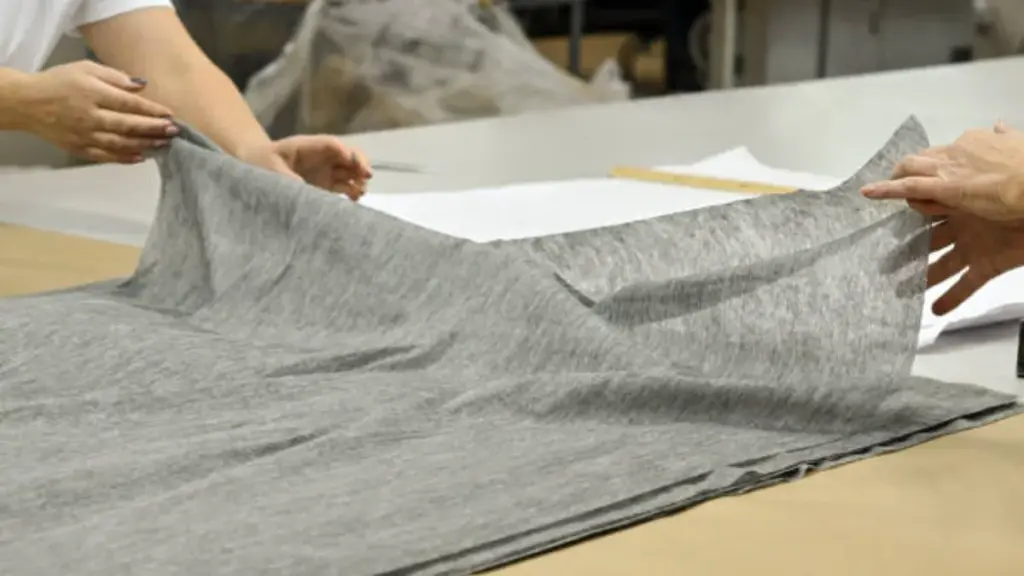
Ponte Roma offers a structured, professional look with excellent stretch recovery. Brushed Nylon prioritizes a soft, comfortable ‘peached’ feel. The choice is structure vs. performance-feel.
| Attribute | Ponte Roma | Brushed Nylon |
|---|---|---|
| Core Feel | Smooth, stable, and structured | Soft, plush, ‘peached’ surface |
| Weight (GSM) | 360–400 (Heavyweight) | Data Not Specified |
| Composition | Typically 66% Rayon, 30% Nylon, 4% Spandex | Nylon blend |
| Durability | Very High (Martindale >80,000) | Data Not Specified |
| Best For | Fitted pants, blazers, structured workleisure | Comfort-focused leggings, base layers |
Composition and Core Characteristics
Ponte Roma is a stable double-knit fabric, meaning it’s constructed with two sets of needles to create a firm, reversible material that resists curling at the edges. Its blend of Rayon, Nylon, and Spandex gives it a subtle sheen and a dense feel, making it an easy choice for garments that need to look sharp and hold their shape, like tailored yoga pants or work-friendly leggings.
Brushed Nylon gets its signature soft feel from a mechanical process. The nylon fibers are abraded to create a ‘peached’ or plush surface that feels comfortable against the skin. This fabric prioritizes hand-feel and comfort over the structural integrity you’d find in a double-knit like Ponte.
Technical Specifications and Performance Data
The hard data for Ponte Roma shows why it performs well in high-wear applications. It’s a true heavyweight fabric built for durability and shape retention.
- Weight: 360–400 GSM
- Thickness: ~0.80 mm
- Stretch Capacity: 25% vertical and 25% horizontal (2-way or 4-way)
- Abrasion Resistance: Over 80,000 revolutions on the Martindale test.
There is a clear data gap for Brushed Nylon. Without specific GSM, stretch, and abrasion metrics, a direct technical comparison isn’t possible. Brands typically select it based on its qualitative feel rather than quantitative performance benchmarks.
Launch Your Yoga Wear Line, No Minimums Required
“Bootcut” vs. “Straight Leg” for Office Wear
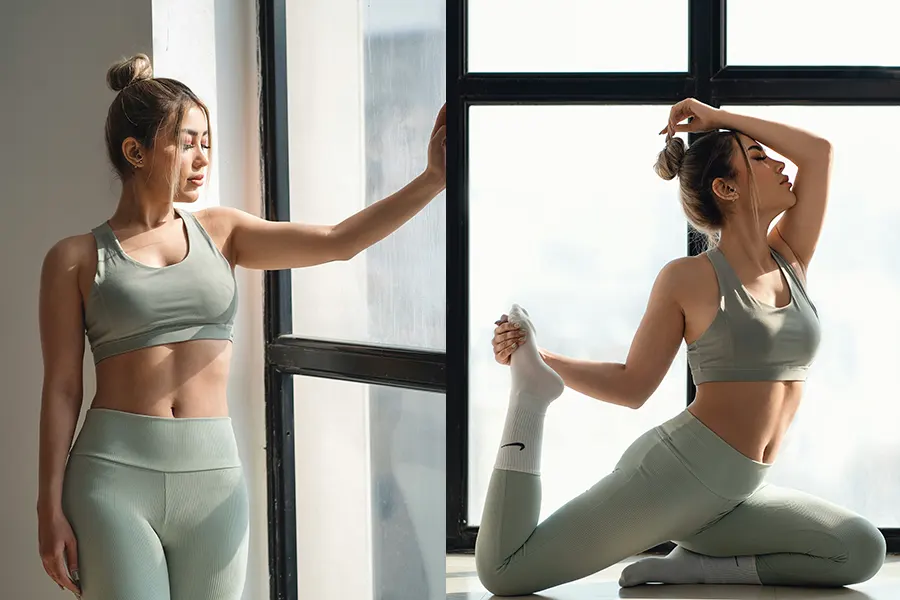
Straight-leg pants offer a timeless, clean line for any office. Bootcut provides more structure and a leg-lengthening flare, working especially well for curvier body types.
Fit and Professional Aesthetic
A straight-leg cut maintains a consistent width from the knee to the ankle, creating a clean, balanced line that’s always professional. In contrast, the bootcut style fits closer on the thigh and begins a subtle flare mid-calf. This adds structure and creates an elongated, leg-lengthening look.
While the straight-leg is almost universally flattering, the bootcut is particularly effective for curvier figures because it highlights the waist and balances proportions.
Styling Application
The flare on a bootcut pant is designed to sit over ankle boots or block heels, maximizing the leg-lengthening illusion. Straight-leg pants offer more versatility and pair well with nearly any shoe, from loafers to heels, making them easy to transition from the office to the weekend.
For outfits, bootcuts look sharp with fitted turtlenecks or a tailored blazer to create a structured ensemble. A final point on both styles: the hem must be properly adjusted for your specific heel height. A sloppy, dragging hemline instantly kills a professional look.
Color Fastness Standards for Daily Wear
International standards like ISO 105 measure fabric resistance to color loss from rubbing, washing, and sunlight to ensure garments maintain their appearance over time.
Key Standards and Grading Systems
Three core ISO standards define a fabric’s ability to hold its color. Each test targets a specific daily stressor—friction, laundering, or sunlight—and uses a distinct grading scale to report results.
- ISO 105-X12 (Rubbing): Measures color transfer from friction. Graded 1-5, with a wet rubbing grade of 2-3 considered acceptable for dark reactive-dyed fabrics.
- ISO 105-C06 (Washing): Evaluates color retention during laundering. AATCC 61 is the common US equivalent.
- ISO 105-B02 (Light): Assesses dye stability against sunlight using a xenon arc lamp. It’s uniquely graded 1-8 against a blue wool reference scale.
Technical Considerations in Testing
Achieving accurate and repeatable results depends on controlling specific variables tied to the dye’s chemical and physical properties.
- Rubbing Fastness: Depends on removing all unfixed surface dyes and physically locking the remaining dye into the fiber.
- Washing Fastness: Relies on the stability of the chemical bond between the dye and fiber, plus effective reduction clearing processes.
- Light Fastness: Limited by the dye’s built-in resistance to photo-oxidation. Accurate testing requires precise humidity control.
- Test Controls: Labs use steel balls to simulate mechanical impact (AATCC 61-2A) and daily calibration with control fabrics to ensure accuracy.
No-Roll Technology
A waistband that rolls down or digs in creates an instant distraction during a busy workday. We utilize No-Roll Technology not just for stability, but for all-day peace of mind. Whether utilizing a soft, grip-enhancing silicone application or a specialized flat elastic casing, our goal is invisible support. The technical specs (like specific tensile strength) are handled by our engineers so that the final result is a smooth, flattering fit that stays in place from the morning commute to the evening unwind, without pinching.

Silicone Application vs. Flat Elastics
The first method involves applying elastomeric silicone compounds directly onto the fabric. These patterns bond with the base material, adding both structure and grip to prevent the waistband from rolling over during wear.
The second approach uses commercial flat elastics. These are polyester/rubber blends engineered to resist twisting. We insert them into a fabric casing and topstitch them in place, forcing the band to lie flat.
Technical Specifications and Material Properties
Material selection is driven by specific performance metrics to guarantee the no-roll function. You can’t just pick any elastic off the shelf and expect it to work.
- Silicone Shore-A Hardness: 20–45
- Silicone Tensile Strength: 250–500 psi
- Silicone Percent Elongation: 100–500%
- Flat Elastic Horizontal Stretch: ~60% capacity before rolling
- Flat Elastic Common Widths: 0.5 to 2 inches
Developing Your Collection
This ‘Concept-to-Shelf’ model uses flexible, No-MOQ production to test the market. It follows a structured workflow covering sampling, bulk production, quality control, and logistics.
The ‘Concept-to-Shelf’ Development Model
The initial strategic phase focuses on nailing the design and branding while minimizing risk. The goal is to validate your product-market fit before committing to a large inventory run. This approach relies on a few key pillars.
- Test the Market with No MOQ: A ‘No Minimum Order Quantity’ policy allows you to launch new designs and test different styles with minimal financial exposure.
- Build Your Brand Identity: Use full private labeling services from the start. This includes custom woven labels, heat-transfer logos, and branded hangtags to create a professional, cohesive look.
- Optimize for Production: Work directly with a development team to turn your sketches or reference photos into production-ready designs that are both feasible and cost-efficient.
- Define Core Design Pillars: Lock in the key features that align with the workleisure philosophy, such as dense knits for structure, comfort waistbands, and sneaker-friendly cuts.
Production & Logistics Workflow
Once your designs are finalized and approved, the process moves into a clear, structured operational workflow to take your collection from a single sample to a market-ready shipment.
- Sampling (7-10 Days): After an initial consultation and material preparation, a physical prototype is created for your approval.
- Bulk Production (~30 Days): Upon sample approval, bulk production begins with industry-leading turnaround times for standard orders.
- Quality Control (QC): Before packaging, a rigorous inspection phase checks all products for issues like weak seams or inconsistent fabric.
- Global Logistics: The final step is coordinating door-to-door delivery to ensure your products arrive reliably, anywhere in the world.
Final Thoughts

Ultimately, the secret to successful yoga pants to wear to work isn’t just in the stitching—it’s in finding the perfect balance between all-day comfort and professional polish. By prioritizing structured fabrics and refined details, you create a versatile staple that your customers can confidently wear from the morning commute to the boardroom.
Ready to turn these insights into reality? At ASG Fashions, we empower brands with agile, private-label manufacturing and flexible solutions that eliminate inventory risks. Explore our Yoga Wear Catalog today to see how we can help you launch a premium workleisure line that works as hard as your customers do.
Frequently Asked Questions
Can I wear yoga pants to work?
Yes, this is part of the ‘workleisure’ trend, which blends athletic comfort with a professional appearance. For the best result, opt for yoga pants specifically designed for the office, often called ‘dress pant yoga pants,’ rather than standard gym leggings, and pair them with professional tops.
What are office-appropriate yoga pants?
Office-appropriate yoga pants are defined by your specific workplace culture and dress code. Generally, they should have high opacity (not see-through), a professional silhouette like a straight or bootcut leg, and be made from a structured, high-quality fabric that mimics traditional trousers.
What are the best yoga pants with belt loops?
Several brands offer yoga dress pants with belt loops to enhance their professional look. Yogipace is a well-known option offering styles in nylon/elastane blends. For more tactical or rugged wear, Alexo Athletica’s Rangewear Legging features 3-inch reinforced belt loops.
How do I style yoga pants for work?
To style yoga pants for work, pair them with structured, professional pieces like blazers, cardigans, or crisp blouses. Choose dark, solid-colored pants with a straight-leg or bootcut fit to maintain a classic silhouette. Brands like Athleta, Spanx, and MM.LaFleur specialize in this ‘workleisure’ category.
Are dress pant yoga pants professional?
In many modern business-casual environments, dress pant yoga pants are considered professional. They are designed with office-appropriate features like faux zippers, belt loops, and structured cuts. However, their suitability ultimately depends on your company’s specific dress code.
Where can I buy thick work leggings?
For thick, durable work leggings, look for fabric weights of 10 oz or higher and a composition of at least 90% nylon. Brands specializing in this category include Carhartt (Force Midweight Leggings), Dovetail Workwear (Field Utility Legging), and Ridgecut (available at Tractor Supply).