Evaluating swimwear manufacturer quality is critical to avoid inconsistent fit, material failures, and costly customer complaints after delivery. This guide helps brands assess whether a supplier has the technical controls needed to maintain product consistency throughout bulk production, from fabric inspection and sample approval to in-process and final quality checks.
You will also learn how to verify measurable quality standards, compare bulk garments against the approved pre-production sample, and review testing and inspection records before shipment. These checks give procurement teams a practical basis for identifying production risks early and setting clear quality requirements with their swimwear manufacturer.
Start With the Manufacturer’s Quality Control System
A structured quality control system shows how a swimwear supplier prevents defects, maintains production consistency, and addresses quality issues before they affect the final shipment.
How a Swimwear QC System Should Work
A reliable QC system connects product specifications with inspections throughout production. For custom swimwear, the manufacturer should work from approved measurement charts, fabric specifications, tolerance requirements, construction details, and inspection criteria. These references keep production and QC teams aligned and give buyers a clear basis for evaluating results.
Statistical sampling can also support final product inspection. Many manufacturers use ISO 2859-1 as a sampling reference and agree on an Acceptable Quality Limit (AQL) with the buyer. AQL 2.5 is commonly used for major defects in apparel inspections, although the applicable level should match the product and the buyer’s requirements.
Quality records provide another layer of control. Material test reports, inspection results, defect records, and corrective actions help buyers assess whether a manufacturer can identify problems, trace their causes, and prevent them from recurring.
Key Inspection Stages From Materials to Shipment
Quality checks should follow the production process, with each stage controlling a different source of risk:
- Pre-Production QC: The factory checks fabrics, elastics, cups, finiture, and hardware against approved specifications. The team also verifies the tech pack, modelli, and Pre-Production Sample (PPS) before bulk production starts.
- In-Process QC: QC staff monitor cutting and sewing to catch problems before they spread. Checks can cover fabric defects, panel accuracy, stretch direction, stitch quality, seam construction, elastic tension, and measurements of semi-finished garments.
- Final QC: Inspectors assess finished garments against the approved specifications and agreed quality criteria. Checks typically cover measurements, workmanship, appearance, etichette, confezione, and functional details. Where AQL sampling applies, the inspection provides a documented basis for shipment approval.
These stages form a continuous quality control process. Together, they help prevent defects before production, control quality during manufacturing, and verify the finished order before shipment.
If you are evaluating Produttori di costumi da bagno con etichetta privata per il tuo marchio, you may find this article useful.

Check Fabric and Material Quality Before Production
Material quality directly affects swimwear fit, durabilità, color retention, and performance in water. Pre-production checks help buyers identify material risks before bulk cutting and sewing begin.
Key Quality Parameters for Swimwear Fabrics
The approved fabric should match the tech pack and support the performance requirements of the finished garment. Buyers should verify measurable properties rather than rely only on appearance or supplier claims.
| Quality Parameter | What to Check | Why It Matters |
|---|---|---|
| Fiber Composition | Confirm the nylon/spandex or polyester/spandex blend matches the approved specification. | The blend affects stretch, hand feel, durabilità, and resistance to chlorine and other conditions. |
| Stretch and Recovery | Check stretch in the required directions and whether the fabric returns to its original shape. | Poor recovery can cause the garment to lose its shape and fit after repeated wear. |
| Colorfastness | Review results for chlorine, seawater, rubbing, washing, and other relevant exposures. | Good colorfastness helps prevent fading, bleeding, and color transfer during normal use. |
| GSM and Width | Compare the actual fabric weight and width with the approved specifications. | Variations can affect coverage, hand feel, material consumption, and production consistency. |
| UV Protection | For sun-protective products, verify the claimed UPF level through appropriate test reports. | Test results support product claims and confirm that the fabric meets the intended protection level. |
Test requirements should match the product’s intended use and target market. Performance swimwear may require stronger chlorine and seawater resistance, while lifestyle styles may place more emphasis on softness, recupero, and appearance.
Inspection Workflow for All Components
Fabric approval provides an important starting point, but the complete material set also needs review. Fodere, elastics, cups, finiture, and hardware can affect fit, function, and durability when they interact with the main fabric.
- Review material documentation: Check supplier test reports, composition, GSM, and other agreed specifications before approving a fabric lot. Whenever possible, match the documentation to the actual material or production lot.
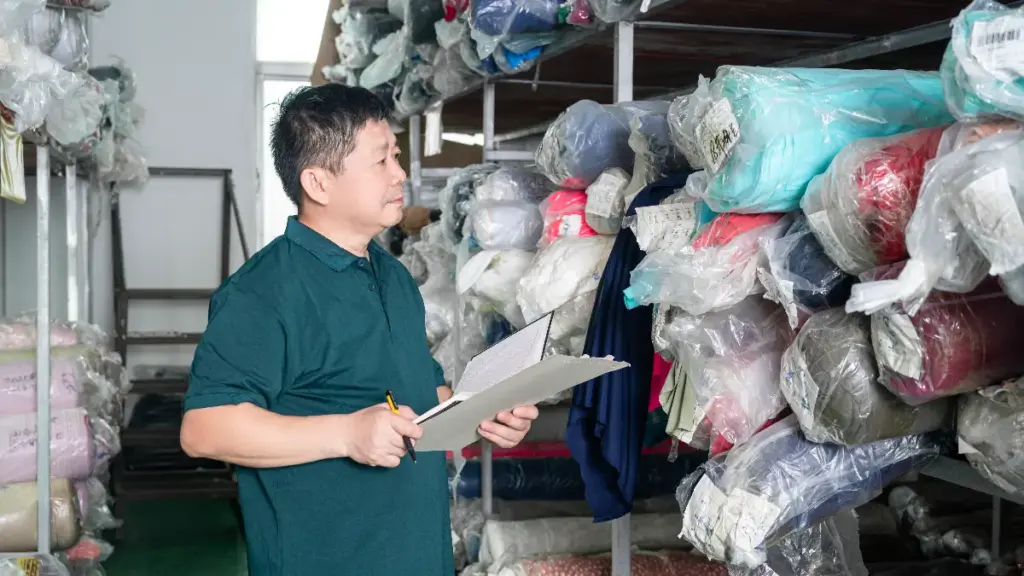
- Inspect incoming fabric rolls: Compare physical rolls with the approved reference. Check for holes, streaks, shade variation, width differences, and other visible defects. Separate non-conforming material before it reaches the cutting process.
- Evaluate supporting components: Confirm that linings provide suitable stretch, elastics offer the required recovery, cups maintain their intended shape, and hardware meets functional requirements. Each component should work with the fabric rather than create a new quality risk.
- Verify the material combination through the PPS: The pre-production sample should use the materials approved for bulk production. Reviewing the completed garment helps confirm that the fabric, lining, elastic, finiture, and construction work together as intended before bulk manufacturing.
This process connects material specifications with actual production conditions. It gives buyers a practical basis for approving materials and addressing non-conforming components before they affect the bulk order.
Scale Your Brand with Custom Swimwear Manufacturing.
Evaluate Fit, Measurements, and Construction Quality
Fit and workmanship show whether a swimwear manufacturer can turn approved specifications into garments that fit correctly, perform comfortably, and maintain consistent quality during bulk production.
Assess Fit and Measurement Accuracy
Measurements provide a useful starting point, but swimwear fit also depends on fabric stretch, elastic tension, garment construction, and body movement. A fit check should therefore combine measurements with a practical wear test.
Compare key points of measure with the approved tech pack and tolerances, then check how the garment sits on the body. Pay attention to bust and leg openings, straps, underbust areas, coverage, and movement. Differences between sizes should also follow the approved grading rather than create inconsistent fit across the range.
- Measurement accuracy: Check key measurements against the approved specifications.
- Fit performance: Assess coverage, supporto, comfort, and movement on the body.
- Size consistency: Confirm that the approved fit carries across the full size range.
Inspect Construction Quality and Workmanship
Construction quality affects how well swimwear performs through repeated wear, stretching, and movement. Focus on areas that experience regular tension, including seams, elastic, lining, and hardware.
Seams should remain secure without skipped stitches, excessive thread tension, or visible distortion. Elastic should sit evenly around openings without puckering, while lining and hardware should stay securely attached. Finishing details such as loose threads, raw edges, or fabric damage also deserve attention because they can indicate inconsistent workmanship.
These checks help buyers assess whether a swimwear manufacturer can consistently translate the approved design into garments with reliable fit and construction quality.
Compare the Approved Sample With Bulk Production
The approved sample provides a practical reference for bulk production, helping buyers identify changes in materials, appearance, adatto, and workmanship before they affect the full order.
Key Areas to Compare With the Approved Sample
The comparison should focus on the product features that directly affect customer experience and brand consistency. Instead of checking every detail equally, buyers can prioritize the elements most likely to change during bulk production.
| Quality Area | What to Compare | Why It Matters |
|---|---|---|
| Adatto & Measurements | Key measurements, proportions, and fit within agreed tolerances | Maintains the approved fit across bulk garments |
| Tessuto & Colore | Stretch, recupero, hand feel, weight, and shade | Prevents visible or performance differences between sample and bulk |
| Construction | Seam placement, stitch details, elastic, lining, e rifinitura | Keeps the finished garment consistent with the approved design |
| Trims & Hardware | Etichette, clasps, rings, cursori, and decorative details | Ensures components match in appearance, placement, e funzione |
The goal is not to make every bulk garment identical in every minor detail, but to keep all agreed specifications and visible product characteristics within the approved range.
When to Compare During Bulk Production
Sample comparison works best when it takes place at several control points rather than only during the final inspection. Early checks allow the factory to correct deviations before they affect a larger quantity of garments.
- Before bulk cutting: Confirm that the bulk fabric and production specifications match the approved requirements before cutting begins.
- First production output: Compare the first complete garments with the approved sample to identify differences in fit, fabric behavior, colore, construction, or trim placement.
- During production: Use the approved sample as a reference when checking whether key product characteristics remain consistent as production continues.
- Prima della spedizione: Compare finished garments with the approved sample during final inspection to confirm that the order still meets the agreed specifications.
This approach creates a clear link between sample approval and bulk production quality, helping buyers detect quality drift early rather than discovering differences after delivery.
Review In-Process and Final Inspection Procedures
A reliable swimwear QC process checks production at key points and uses final inspection to confirm that finished goods meet the agreed specifications before shipment.
In-Process Controls for Early Defect Detection
In-process inspection helps identify production problems early, when corrections can still be made. During cutting, QC teams can check pattern alignment, stretch direction, panel dimensions, and fabric defects. During sewing, they can monitor stitch quality, seam construction, elastic application, and component placement.
When a recurring defect appears, the factory should identify the cause, correct the process, and check affected pieces before production continues. This helps maintain bulk production quality and reduce repeated defects and unnecessary rework.
Final Inspection for Shipment Approval
Final inspection provides the last opportunity to verify the finished order against the approved specifications and agreed quality standards. Unlike in-process checks, it evaluates the completed product from the buyer’s perspective, including appearance, workmanship, measurements, function, e imballaggio.
| Inspection Area | What to Check | Purpose |
|---|---|---|
| Appearance & Lavorazione | Stains, snags, loose threads, seams, stampe, and visible defects | Confirms overall product quality |
| Measurements | Key points of measure against approved tolerances | Confirms size consistency |
| Funzione & Components | Stretch, recupero, hardware, etichette, and other functional details | Confirms the garment performs as specified |
| Confezione & Labeling | Etichette, barcodes, folding, polybags, and carton markings | Prevents shipping and retail presentation errors |
The inspection method and acceptance criteria should follow the buyer’s agreed requirements. Where AQL sampling applies, the sampling plan and acceptance limits should be confirmed before inspection rather than assumed as a universal standard.
Verify Testing, Defect Standards, and Inspection Records
Test results and quality records give buyers evidence of how a swimwear manufacturer manages material performance, product defects, and quality consistency before shipment.
Check Testing Requirements and Defect Standards
Testing should match the product’s materials, intended use, and target market. For swimwear, buyers can review key performance areas such as chlorine and seawater resistance, stretch and recovery, solidità del colore, and UV protection when applicable.
| Quality Area | What to Verify | Example Reference |
|---|---|---|
| Water Resistance | Color change or staining after chlorine or seawater exposure | ISO 105-E03, AATCC TM106 |
| Stretch & Recovery | Stretch performance and recovery after extension | ASTM D3107 or agreed method |
| Colorfastness | Resistance to fading and color transfer during use and care | Applicable washing, rubbing, or light tests |
| Market Compliance | Chemical and product requirements for the target market | REACH, OEKO-TEX, CPSIA where applicable |
Defect standards should also be agreed before production. Buyers and manufacturers can classify defects as critical, major, or minor, then define the inspection method and acceptance limits for each category. If AQL sampling applies, confirm the sampling plan and AQL levels in advance rather than treating one AQL value as a universal standard.
Review Quality Records and Compliance Documents
Documents help buyers verify whether the manufacturer’s stated QC process operates consistently in real production. Look for records that connect materials, production batches, testing, and inspection results.
- Test reports: Check the tested material, test method, results, and report date.
- Compliance documents: Confirm that certificates or declarations apply to the materials and target market.
- Inspection reports: Review measurements, workmanship results, defect classifications, and acceptance decisions.
- Traceability records: Confirm that fabric lots and production batches can be linked to relevant test and inspection records.
These records provide stronger evidence than general quality claims. A combination of testing, defect standards, and traceable inspection records helps buyers assess whether a supplier can maintain consistent quality throughout bulk production.
If you want to know more about How to Start a Swimwear Line, you can read this article.
Considerazioni finali
A reliable swimwear manufacturer should do more than produce an approved sample. The real test is whether the factory can maintain the same standards for materials, adatto, construction, and workmanship throughout bulk production. Reviewing its QC process, testing practices, defect standards, and inspection records gives buyers stronger evidence before committing to a large order.
For brands developing custom swimwear, ASG Moda combines sample development with material inspection, production quality control, e ispezione finale. Contact our team to discuss your product requirements and see how we can support your next bulk production project.
Domande frequenti
How do you check the quality of a swimwear manufacturer?
To check the quality of a swimwear manufacturer, focus on verifiable production capabilities, swimwear‑specific quality control systems, material and construction performance, certifications and compliance, sampling and testing practices, and supplier reliability signals.
What is AQL 2.5 in garment inspection?
An AQL 2.5 in garment inspection is a statistical quality control setting used in acceptance sampling that defines how many major defects are tolerated in an inspected sample before a shipment of garments, including swimwear, must be rejected and reworked.
What documents should I request from a swimwear manufacturer before bulk production?
Ask for relevant material test reports, product specifications, sample approval records, inspection reports, compliance documents, and quality standards agreed for the order. The exact documents depend on the swimwear design, materiali, and target market.
How can I tell if a swimwear sample is ready for bulk production?
A sample is ready for bulk production when the fit, measurements, tessuto, colore, construction, finiture, etichette, and other agreed details have been reviewed and approved. The approved sample should then serve as a clear reference for bulk production and quality inspection.
Should swimwear manufacturers provide fabric test reports before production?
SÌ, when material performance is important to the product or target market. Fabric test reports can help verify properties such as fiber composition, solidità del colore, stretch and recovery, GSM, and other performance requirements before the fabric enters bulk production.