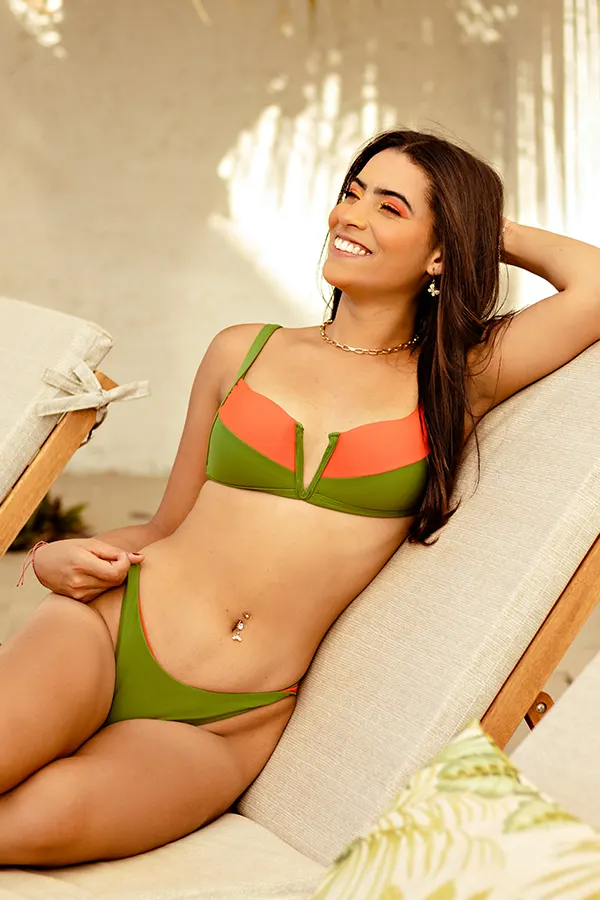
Plus-size swimwear offers growing opportunities for brands, but extending a standard size range from S to 4X requires more than increasing measurements. Differences in bust proportions, torso length, fabric recovery, and support construction directly affect fit and production costs.
This guide helps swimwear brands and product developers build an extended-size collection with practical specifications. Learn how to develop size charts, establish grading rules, choose supportive fabrics and construction, and plan sampling, MOQ, そして生産コスト. Use these insights to create more accurate tech packs, reduce fit-related returns, and prepare your next plus-size swimwear line for production.
The Plus-Size Swimwear Market Opportunity
Demand for size-inclusive swimwear spans different age groups. あ 2022 survey of 2,210 女性, commissioned by QVC and conducted by Morning Consult, found that:
- 65% considered size inclusivity important when shopping for swimwear.
- Around one in four had difficulty finding flattering swimwear or styles available in their size.
These findings highlight unmet customer needs and opportunities for swimwear brands (QVC Swimwear Size Inclusivity Survey).
The broader apparel market shows similar demand:
- Market value: The US plus-size apparel market was valued at $237 billion in 2023, with 40% growth projected over the following five years, according to estimates cited by Cotton Incorporated’s 2024 Supply Chain Insights.
- Sizing consistency: 46% of plus-size respondents in Vogue Business’s 2025 survey considered inconsistent sizing a shopping barrier.
- Inclusive marketing: 78% said they were more likely to buy from brands featuring models across different body sizes.
(From: Vogue Business Consumer Sizing Survey)
For swimwear brands, this opportunity requires more than adding 1X–4X labels to existing designs. Brands need to consider:
- Dedicated size grading and accurate measurement charts.
- Supportive construction for different body proportions.
- Product imagery featuring plus-size models.
- A varied range of styles, coverage, and fits. Explore different types of swimsuits when planning the collection.
The goal is to develop extended sizes as a полноценная product range, not just a limited seasonal extension.
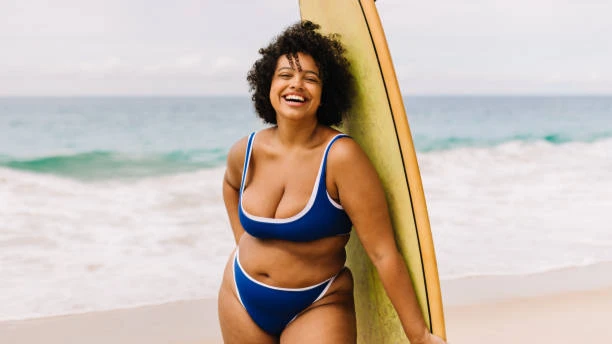
Plus-Size Swimwear Sizing & Fit Requirements
Plus-size swimwear requires more detailed fit development than simply extending a standard size range. Brands need to account for differences in body proportions, especially across the bust, waist, hips, and torso. A consistent measurement system also helps factories develop accurate patterns and grading rules.
US vs. EU vs. UK Plus-Size Sizing Systems
US, EU, and UK sizing systems use different size labels. More importantly, these labels do not always correspond to the same body measurements across brands.
When developing an international size range, brands should:
- Establish a brand-specific size chart based on body measurements rather than relying on size labels alone.
- Provide bust, waist, and hip measurements in both inches and centimeters.
- Define the corresponding size range for each market, such as US 1X–4X, UK 20–34, or EU 46–60, where appropriate.
- Keep measurement references consistent across product pages, size charts, and technical specifications.
A size conversion chart can help customers identify their approximate size. しかし, it should not replace actual body measurements. Brands should also clarify whether their charts show body measurements or garment measurements, as the two serve different purposes.
Grading Challenges: Bust, Waist & Hip Adjustments
Plus-size grading involves more than adding the same amount to every measurement. Body proportions change differently across sizes, so each measurement point needs its own grading rule.
Key areas to consider include:
- Bust and cup depth: Adjust bust circumference, cup volume, and underbust measurements separately to provide sufficient coverage and support.
- Waist and hips: Account for changes in waist-to-hip proportions rather than applying uniform increments across the body.
- Strap and upper-body fit: Reposition straps and adjust armhole and neckline dimensions to maintain coverage and prevent digging or gaping.
- Torso and rise: Increase torso length and adjust front and back rise where needed, especially for one-piece swimsuits and high-waist bottoms.
Fit also depends on how these measurements work together. A swimsuit may meet the bust and hip specifications individually but still feel uncomfortable if the torso length or strap placement is incorrect.
Tech Pack Measurement Tolerances
A tech pack should specify the measurement points, grading increments, and acceptable tolerances for each size. This gives pattern makers and quality control teams a consistent reference during sampling and bulk production.
例えば, the tech pack should define:
- Point of Measure (POM) for each garment area.
- Target measurements for every size.
- Grading increments between consecutive sizes.
- Positive and negative tolerances for each measurement point.
Tolerances should reflect the construction and stretch properties of the fabric. If several measurement points exceed their limits in the same direction, the combined fit difference may become noticeable even when individual measurements appear acceptable.
Support & Construction Requirements
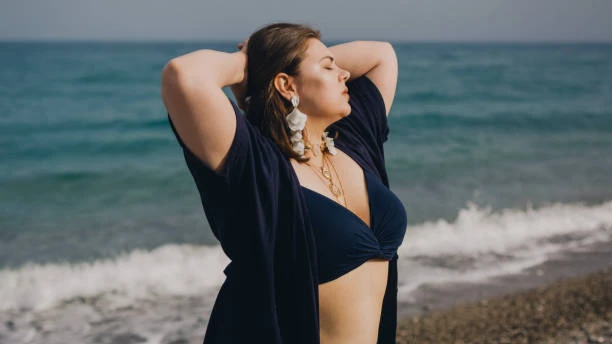
Support is a key consideration in plus-size swimwear development. Larger sizes often require more than simply using wider elastic or thicker fabric. Brands need to select construction methods based on the garment style, level of coverage, and support required.
アンダーワイヤー, Shelf Bras & Power Mesh
Different support structures serve different purposes. The right choice depends on the design and the level of support a swimsuit needs.
- アンダーワイヤー: Provides defined bust support and shaping. It works well for structured one-piece swimsuits and bikini tops designed for fuller busts. Proper wire sizing and casing construction are essential to prevent discomfort.
- Shelf bras: Use an internal lining and elastic under the bust to provide light to moderate support. They are suitable for swim tops and one-piece styles that need additional coverage without a separate underwire structure.
- Power mesh: Adds compression and helps stabilize the garment. It is commonly used in front panels, bust linings, and torso areas where brands want additional support or shaping.
These materials can also be combined. 例えば, a swimsuit may use a shelf bra for bust support and power mesh through the front panel for additional stability.
ストラップ, Boning & Adjustable Backs
The upper-body construction affects how well a swimsuit stays in place during movement. Several details deserve attention:
- Wider straps: Distribute weight across a larger shoulder area and can reduce pressure. Adjustable straps also help accommodate different torso and bust proportions.
- Boning: Supports the side seams and helps maintain the shape of structured swimsuits. It is particularly useful in designs with defined bust shaping or strapless elements.
- Adjustable backs: Hook-and-eye closures, adjustable bands, and tie-back designs allow customers to modify the fit around the underbust and back.
Strap width alone does not determine support. Placement, elastic strength, attachment points, and overall garment construction also affect comfort and stability.
Tummy Control Panels & Ruching
Tummy control designs use fabric layers and construction details to create a smoother silhouette. しかし, stronger compression does not automatically mean better fit.
Common options include:
- Power mesh panels: Add controlled compression across the front torso.
- Double-layer front panels: Provide extra coverage and help stabilize the fabric.
- Ruching: Creates a gathered effect that adds texture and visually softens the appearance of the midsection.
The main challenge is balancing compression with comfort. Fabric that is too tight can restrict movement, create pressure around the waist, or cause edges to roll. Brands should test these details during fit sessions, including when sitting, bending, and moving in water.
Develop Your Plus-Size Swimwear Collection With ASG
From custom sizing and pattern development to supportive construction, サンプリング, and bulk production, ASG helps swimwear brands develop plus-size collections tailored to their product requirements.
OEM & ODM | Custom Sizing | プライベートラベル
Discuss Your Plus-Size Swimwear Project →Fabric Selection & Performance Testing
Fabric selection directly affects the fit, サポート, 耐久性, and comfort of plus-size swimwear. Extended-size designs place greater demands on stretch and recovery, especially around the bust, waist, and hips. Brands should evaluate both fabric composition and performance before confirming materials for production.
High-Spandex Blends & Their Trade-Offs
Nylon-elastane blends are widely used in swimwear because they combine a smooth surface, ストレッチ, and flexibility. Common fabric compositions include 80% ナイロンと 20% elastane, または 85% ナイロンと 15% elastane.
The right ratio depends on the garment design and intended performance.
- Higher elastane content: Can provide greater stretch and a closer fit. しかし, it may increase material costs and requires careful testing to confirm recovery after repeated stretching.
- Lower elastane content: May offer a firmer fabric feel and lower material costs, but insufficient stretch can restrict movement and affect fit.
- Fabric weight and structure: Also influence coverage, 圧縮, そしてサポート. A higher elastane percentage alone does not guarantee better performance.
For plus-size swimwear, brands should assess how the fabric performs across the full size range. A material that works well in smaller sizes may feel too restrictive or provide insufficient support in larger sizes.
Stretch Recovery, Chlorine & UV Resistance
Swimwear fabric needs to maintain its shape and performance through repeated use. Several tests can help brands evaluate material quality:
- Stretch and recovery: Measure how far the fabric stretches and how well it returns to its original dimensions after repeated extension. Poor recovery can cause sagging around the bust, waist, and leg openings.
- Chlorine resistance: Evaluate changes in fabric strength, 弾性, and color after exposure to chlorinated water.
- UV resistance: Assess how well the fabric protects against ultraviolet radiation when UV protection is part of the product’s performance claims.
- Wear testing: Test finished garments through swimming movements, sitting, bending, and repeated wear to identify issues such as fabric sagging, seam distortion, and uncomfortable compression.
Testing Standards & Acceptance Criteria
Brands should define testing methods and acceptance criteria before bulk production. Relevant methods may include:
- ASTM D2594: A method for evaluating stretch properties of knitted fabrics.
- ISO 105-E03: Tests colorfastness to chlorinated water.
- AATCC TM162: Evaluates colorfastness to chlorinated pool water.
- AATCC TM183: Measures the blocking or transmission of erythemally weighted UV radiation through fabrics.
Not every standard measures the same performance. 例えば, colorfastness to chlorinated water does not establish whether a fabric retains its elasticity after chlorine exposure. Brands should therefore specify separate requirements for color, dimensional change, ストレッチリカバリー, and strength retention.
Acceptance limits should be agreed upon with the fabric supplier and testing laboratory. They should also reflect the intended product positioning, fabric composition, and applicable market requirements.
Plus-Size Swimwear Range Planning
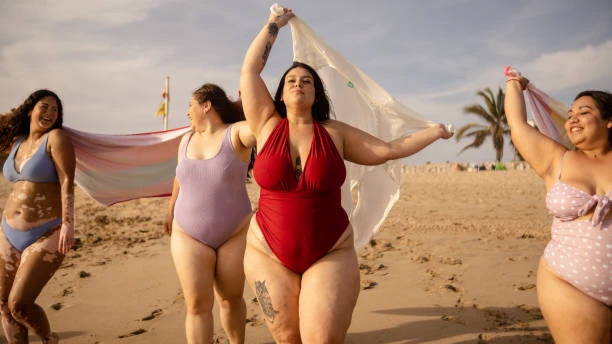
A well-planned plus-size swimwear collection should offer different levels of coverage, サポート, and styling. Rather than expanding every existing design into every size, brands can start with a focused range of core styles and build more combinations around them.
Swim Dresses, タンキニス & High-Waist Bottoms
These styles offer different coverage options and can help brands reach customers with varied fit and styling preferences.
- Swim dresses: Combine a swimsuit base with a skirted outer layer. They are suitable for customers who prefer more coverage around the hips and thighs.
- タンキニス: Pair a separate top with swim bottoms. Longer tops provide additional torso coverage, while adjustable details can improve fit.
- High-waist bottoms: Offer more coverage around the waist and lower abdomen. Brands should pay attention to rise, waistband construction, and leg openings to avoid excessive pressure or rolling.
A balanced collection can include these styles alongside classic one-piece swimsuits and bikinis. This gives customers more options without making the initial product range unnecessarily complex.
Mix-and-Match Separates Strategy
Selling swim tops and bottoms separately gives customers more flexibility, especially when their bust and hip measurements fall into different size categories.
ブランド向け, this approach offers several advantages:
- More accurate fit: Customers can select different sizes for tops and bottoms instead of compromising with a fixed-size set.
- More product combinations: A single top can be paired with multiple bottom styles, increasing the range of available looks.
- Flexible color coordination: Solid-color pieces can be combined with printed designs, while coordinating prints can create a consistent collection.
- More targeted inventory planning: Brands can adjust top and bottom size quantities based on actual sales patterns.
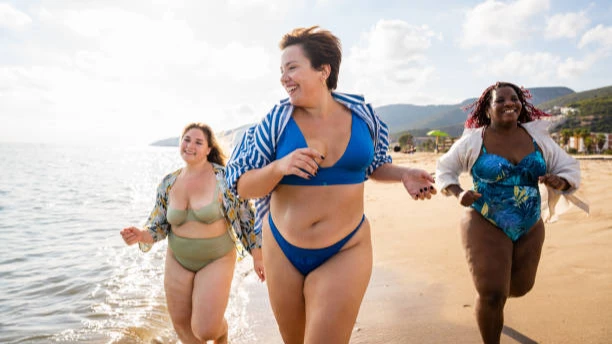
Product presentation also matters. Use plus-size models to show how each style fits on different body proportions. Include front, side, and back views where possible, along with clear size information. This helps customers evaluate coverage, サポート, and fit before purchasing.
製造 & Sourcing for Plus-Size Lines
Developing a plus-size swimwear line requires careful planning before bulk production. Brands need to consider MOQ, size distribution, fit validation, and the additional costs of extended-size grading. Clear specifications help manufacturers manage sampling and production more efficiently.
MOQ, サンプリング & Size Curve Planning
MOQ determines how brands distribute their first order across sizes and colors. For a new collection, a manageable initial order can help control inventory while testing customer demand.
Key considerations include:
- MOQ per style: Confirm whether the factory calculates MOQ by style, 色, or total order quantity, and whether sizes can be combined.
- Size curve: Allocate quantities based on target markets, sales channels, and customer data rather than assuming equal demand across sizes.
- Sampling costs: Clarify sample fees, revision charges, and whether development costs can be deducted from bulk orders.
- Sampling timeline: Allow time for pattern development, initial samples, fit revisions, and pre-production approval.
For the first order, brands should prioritize a manageable size range and collect sales data before expanding the size curve. For additional branding options, explore ASG Fashions’ private label swimwear services, including custom labels, タグ, と包装.
Fit Models & Inclusive Development Process
Testing only one size is not enough for an extended-size collection. Different body proportions can affect how a swimsuit fits across the size range.
A practical fitting process includes:
- Base-size fitting: Establish the initial pattern and construction using a representative size.
- Smallest-size fitting: Check strap placement, armholes, leg openings, and overall proportions.
- Largest-size fitting: Evaluate bust coverage, torso length, waistband pressure, そしてサポート.
- Pattern adjustments: Refine grading rules and construction based on fit feedback.
- Pre-production approval: Confirm final measurements, 材料, and construction before bulk production.
Fit models should be selected based on actual body measurements, not size labels alone. This helps identify issues that may not appear on a size chart.
Why Plus-Size Grading Costs More
Extended-size grading can increase both development and production costs. Larger sizes often require more than proportional adjustments to the original pattern.
The main cost factors include:
- Pattern development: Bust volume, torso length, and waist-to-hip proportions may need separate adjustments.
- Additional fit sessions: Testing multiple sizes can require more samples and revision rounds.
- Material consumption: Larger patterns use more fabric and may require additional lining, power mesh, or wider elastic.
- Cutting efficiency: Changes in pattern dimensions can affect fabric layout and material waste.
- Construction requirements: Some designs need reinforced components or additional support structures.
Brands should account for these costs when setting target prices. They can compare production costs across size groups and choose between uniform retail pricing and size-based pricing. Any price differences should reflect actual costs and remain transparent to customers.
最終的な考え
Developing a plus-size swimwear collection requires more than extending a standard size range. Accurate grading, 支持構造, 耐久性のある生地, and proper fit testing all contribute to a better-fitting product. Careful planning across sampling, size distribution, and production costs also helps brands build an extended-size range that meets customer expectations and supports long-term sales.
ASG ファッション provides OEM and ODM swimwear manufacturing services for brands developing inclusive collections. From pattern development to bulk production, our team supports different styles and size requirements. ASG ファッションへのお問い合わせ to discuss your next project.
よくある質問
Can a manufacturer develop custom size charts and grading for plus-size swimwear?
はい. Brands can provide their own size charts, body measurements, and measurement specifications for pattern development. Grading rules should account for changes in bust, waist, hips, and torso length across sizes. Fit testing on representative sizes also helps verify that the patterns maintain appropriate proportions throughout the range.
Can swimwear tops and bottoms be manufactured in different sizes?
はい. Separate sizing allows customers to combine different top and bottom sizes based on their bust and hip measurements. ブランド向け, this requires separate size specifications, inventory planning, and production quantities for each component. MOQ arrangements for mix-and-match sets should be confirmed with the manufacturer before ordering.
What information should brands provide when requesting a plus-size swimwear sample?
Brands should provide a tech pack, sketches, reference photos, or a written design brief. Important details include the target size range, body measurement chart, fabric composition, 裏地, support features, 色, プリント, and logo placement. Target order quantities and private-label requirements also help the manufacturer confirm material availability, sampling costs, and development details.
How long does custom plus-size swimwear sampling and production take?
ASG ファッションにて, sample production typically takes 7–10 days. Bulk orders of up to 1,000 pieces take approximately 30 days after sample approval. Complex designs, 物質的な調達, and larger quantities may require additional time. Brands should confirm the final production schedule with the manufacturer before placing an order.
How can brands control quality when manufacturing plus-size swimwear?
Brands should establish measurement specifications, grading rules, fabric requirements, and construction details before bulk production. Fit samples should be evaluated across representative sizes, including the smallest and largest sizes in the range. During production, the approved sample should serve as the reference for measurements and workmanship, followed by finished-goods inspection before shipment.