A reliable swimwear manufacturer must do more than meet a target price. Your supplier needs to handle stretch fabrics, accurate fit, consistent quality, realistic MOQs, and production timelines while meeting the technical and commercial requirements of your brand. The wrong manufacturing partner can lead to fit problems, production delays, inconsistent quality, and higher costs.
This guide gives brand owners and purchasing teams a practical framework for evaluating potential suppliers before placing an order. It covers the key capabilities, technical standards, commercial terms, and customization support to check, helping you reduce production risks and build a supplier relationship that can support future collections and larger orders.
Define Your Brand’s Swimwear Manufacturing Requirements
Before contacting manufacturers, clarify your product specifications and project requirements. This gives you a clear basis for evaluating suppliers and comparing their capabilities against your brand’s actual needs.
Define Your Product and Technical Requirements
Start by documenting what you want the manufacturer to produce. A swimwear tech pack can organize the key information and give suppliers a clear reference during product development and sampling.
Include product measurements, ग्रेडिंग, fabric composition, जीएसएम, stretch requirements, lining, ट्रिम्स, construction details, and other features that affect the finished garment. Add technical drawings to show important details such as seam construction, support structures, edge finishes, removable pads, or underwires.
Visual requirements should also be clearly defined. Provide print artwork with placement instructions and use references such as Pantone codes for colors. If some specifications remain flexible, mark them as preferences rather than fixed requirements. This gives manufacturers room to suggest suitable alternatives without changing the core design direction.
- Product Specifications: Measurements, ग्रेडिंग, construction, lining, and trims.
- Material Requirements: Fabric composition, जीएसएम, खींचना, and required performance.
- Visual Requirements: Artwork, print placement, रंग, branding, and other design details.
Define Your Order and Business Requirements
Product requirements alone are not enough to guide supplier evaluation. You should also establish the basic conditions of the project, including expected order volume, target budget, launch schedule, target market, and essential compliance requirements.
These requirements do not need to be completely fixed before you contact manufacturers. For example, you may have an estimated order range rather than a final quantity, or a target price rather than a fixed cost. The purpose is to establish a realistic reference for supplier discussions.
Separate must-have requirements from flexible preferences. A specific fabric standard, delivery window, or market requirement may be essential, while other factors may allow adjustment based on the manufacturer’s recommendations.
With these requirements defined, you can use the same criteria when reviewing different manufacturers. This makes it easier to identify suppliers that fit your product, business stage, and project priorities before moving into detailed comparison.
Check Swimwear Manufacturing Experience and Capabilities
General apparel experience does not guarantee swimwear expertise. Check a supplier’s track record, technical skills, and production equipment to confirm it can handle your product requirements.
Confirm Swimwear Specialization and Track Record
Swimwear requires specific experience with stretch fabrics, elastic tension, and body-contouring construction. A factory focused mainly on t-shirts or dresses may face a learning curve when producing swimwear, so prioritize suppliers with a proven swimwear track record.
Review the manufacturer’s portfolio and look for styles similar to your collection. Experience should match your product type, whether you need fashion bikinis, performance suits, men’s trunks, plus-size swimwear, or more specialized designs.
- Product Categories: Check experience with the swimwear types your brand plans to produce.
- Niche Capabilities: Verify previous work with seamless, bonded, underwire, or modest swimwear when required.
- Export Experience: Check whether the manufacturer has experience serving your target markets and their relevant requirements.
- Production Experience: Ask about previous projects involving similar swimwear styles, materials, or construction methods.
These checks help you distinguish a factory that lists swimwear among its products from one that has built real expertise in the category.
Assess Technical and Production Capabilities
A factory’s technical capabilities determine how well it can turn a design into a stable, repeatable product. Pay particular attention to pattern making, sewing technology, printing, and sample development.
The pattern team should understand stretch-garment construction, negative ease, ग्रेडिंग, and adjustments for different body shapes. The production floor should also have suitable equipment, such as zigzag, फ्लैटलॉक, and coverstitch machines. For bonded or seamless designs, confirm that the required equipment and processes are available.
Printing and sampling provide another useful test. Ask how the factory controls print placement, color consistency, and sample revisions. A capable supplier should be able to explain how it develops a prototype, identifies technical issues, and prepares the approved sample for bulk production.
- Pattern Making: Confirm in-house experience with stretch patterns, ग्रेडिंग, and different body types.
- Sewing Technology: Check equipment for the construction methods your products require.
- Printing & रंग: Verify experience with printing on stretch fabrics and maintaining alignment and color consistency.
- Sampling Process: Ask how the team handles prototype development, fit adjustments, and sample approval.
The goal is not simply to confirm that a manufacturer offers these services. Ask for evidence from previous projects and specific examples of how its team handles technical challenges.
You may interested in ASG Fashions’s Manufacturing programme.
Launch Your Custom Swimwear Line Fast
Evaluate Fabric, उपयुक्त, and Product Development Support
कपड़ा, उपयुक्त, and development capabilities directly affect the quality of your finished swimwear. A capable swimwear manufacturer should be able to explain how it manages these areas during product development.
Check Fabric and Fit Capabilities
Ask how the manufacturer evaluates fabrics and develops patterns for different swimwear styles. The goal is not to find one standard fabric specification, but to confirm that the supplier can match material performance with the design and intended use.
Look for experience with key swimwear requirements such as:
- Fabric Performance: Check how the supplier evaluates stretch, वसूली, colorfastness, wet opacity, and resistance to chlorine or saltwater when relevant.
- Pattern and Fit: Ask how the pattern team accounts for fabric stretch, negative ease, सहायता, coverage, and different body shapes.
- Product-Specific Materials: Confirm that the manufacturer can recommend suitable fabric compositions, जीएसएम, and construction based on the product rather than applying the same specifications to every style.
You can also review previous samples or similar products to assess the manufacturer’s practical experience. Pay attention to areas such as fit consistency, seam construction, coverage, and how the garment performs when worn or stretched.
Assess Product Development Support
A manufacturer should do more than produce a design you provide. Its development team should help turn the concept into an approved sample that can move into bulk production.
Ask how the supplier manages the development process from the initial design through pattern making, sampling, revisions, and final approval. A clear process should also record changes so the approved specifications remain consistent when production starts.
Technical communication is another important indicator. When a design creates a problem, such as insufficient support, unsuitable fabric performance, or a difficult construction detail, the manufacturer should be able to explain the issue and recommend practical alternatives.
This gives you a better way to evaluate custom swimwear manufacturers: not only by the samples they can produce, but by how effectively their technical and development teams solve problems before bulk production.

Compare MOQ, Sampling, Pricing, and Lead Times
MOQ, sampling costs, pricing, and lead times directly affect your inventory risk and launch schedule. Compare these terms against your order volume, budget, and expected growth rather than using one fixed benchmark.
Compare MOQ and Sampling Terms
Start with the minimum order and sampling conditions. The MOQ should fit your expected sales volume without creating unnecessary inventory pressure, while sampling terms should give you enough flexibility to evaluate a product before committing to bulk production.
Check how the MOQ applies and what the sample fee covers. Key points include:
- MOQ Structure: Confirm whether the minimum applies per order, style, रंग, or size.
- Sample Terms: Check sample fees, included services, and revision costs.
- Order Flexibility: Ask whether the supplier can support smaller test orders or different quantities as your brand develops.
Clear terms make it easier to judge whether the manufacturer suits your current business stage. A lower MOQ can be useful for testing new products, but it should not be the only reason to choose a supplier.
Evaluate Pricing and Lead Time
A quotation should give you a clear basis for comparing suppliers. Review the price together with the quoted fabric, construction, customization, पैकेजिंग, and order quantity to avoid comparing different specifications.
Lead time provides another important measure of supplier suitability. Confirm the expected timeline for sampling and bulk production, and check whether it fits your planned launch schedule.
Before making a decision, consider whether the manufacturer’s price and lead time remain reasonable when compared with its product quality, production capabilities, and service scope. The lowest quotation or shortest timeline may not offer the best overall value if it creates higher production or delivery risks.

Verify Quality Control and Production Standards
Quality claims need evidence. A reliable swimwear manufacturer should have clear quality controls and provide relevant testing or inspection records to support its production standards.
Review Quality Testing and Inspection Standards
Ask whether the manufacturer has established testing and inspection procedures that match your product and target market. Requirements can vary by fabric, swimwear type, and destination market, so the supplier should be able to explain which standards and tests apply to your products.
Pay attention to several key areas:
- Fabric Testing: Ask for relevant test reports covering requirements such as colorfastness, stretch and recovery, or UV protection when applicable.
- Production Inspection: Confirm that the factory checks materials, workmanship, measurements, and construction during production.
- Final QC: Ask what inspection standard or sampling plan the manufacturer uses before shipment, such as AQL 2.5 or another agreed standard.
- Documentation: Request sample QC records, test reports, or other quality documents when available.
The goal is not to require every supplier to use exactly the same testing system. Instead, check whether the swimwear manufacturer has a clear and documented quality process that matches your product requirements.
Check Quality Consistency Before Bulk Production
A good sample does not automatically guarantee consistent bulk production. Ask how the manufacturer keeps bulk orders aligned with the approved sample, specifications, materials, रंग, and measurements.
You can also confirm:
- Whether bulk materials are checked against approved standards
- Whether production follows the approved sample and specifications
- How defects are identified and corrected during production
- Whether inspection results can be reviewed before shipment
A manufacturer that can clearly explain these procedures provides stronger evidence of production reliability than one that simply promises “strict quality control.” This is especially important when you plan to place repeat orders, expand your product range, or increase production volume.
Check Customization, Communication, and Long-Term Support
A strong supplier should fit your brand beyond the first order. Review its customization scope, communication process, and ability to support repeat orders as your business grows.
Verify Customization Options and Service Scope
Different swimwear manufacturers offer different levels of customization. Confirm that the supplier can support your business model, से private label programs to full OEM or ODM production.
Look beyond basic logo application. Your brand may need custom product details, लेबल, टैग हैंग, पैकेजिंग, or other branded elements. Check which services the manufacturer handles in-house and which require outside suppliers.
- Product Customization: Confirm whether the factory can develop products based on your designs or modify existing styles.
- Branding: Check options for labels, टैग हैंग, logos, and other brand elements.
- पैकेजिंग: Confirm whether the manufacturer can provide packaging that matches your requirements.
- Service Scope: Clarify which customization services are included and which may involve additional costs or minimum quantities.
This gives you a clearer view of whether the supplier can support your brand’s customization needs without relying on multiple external vendors.
Assess Communication and Long-Term Support
Communication quality can affect every stage of an ongoing supplier relationship. Pay attention to how the manufacturer answers technical questions, records specification changes, handles sample approvals, and provides production updates.
Long-term support also matters if you expect repeat orders or new collections. Check whether the supplier can maintain approved product specifications, reproduce existing styles consistently, and increase production when your order volume grows.
Consider a few practical areas:
- Repeat Orders: Check whether approved styles and specifications can be reproduced consistently.
- Production Capacity: Confirm that the factory can support higher volumes as your brand grows.
- Communication: Assess whether questions, changes, and production updates are handled clearly and systematically.
- Issue Resolution: Clarify how the manufacturer handles production problems and after-sales issues.
A manufacturer that communicates clearly and supports repeat production can offer more long-term value than one that only provides a competitive first-order price. For brands planning multiple collections, supplier fit should include the ability to grow with the business.
Supplier Vetting Checklist: The 12 Points That Decide the Order
Use the following twelve checks to score a swimwear supplier before you commit to a production order. Each point maps back to the criteria above and carries the benchmark you should expect from a capable export factory.
Factory Capability Checks
1. Monthly Production Capacity
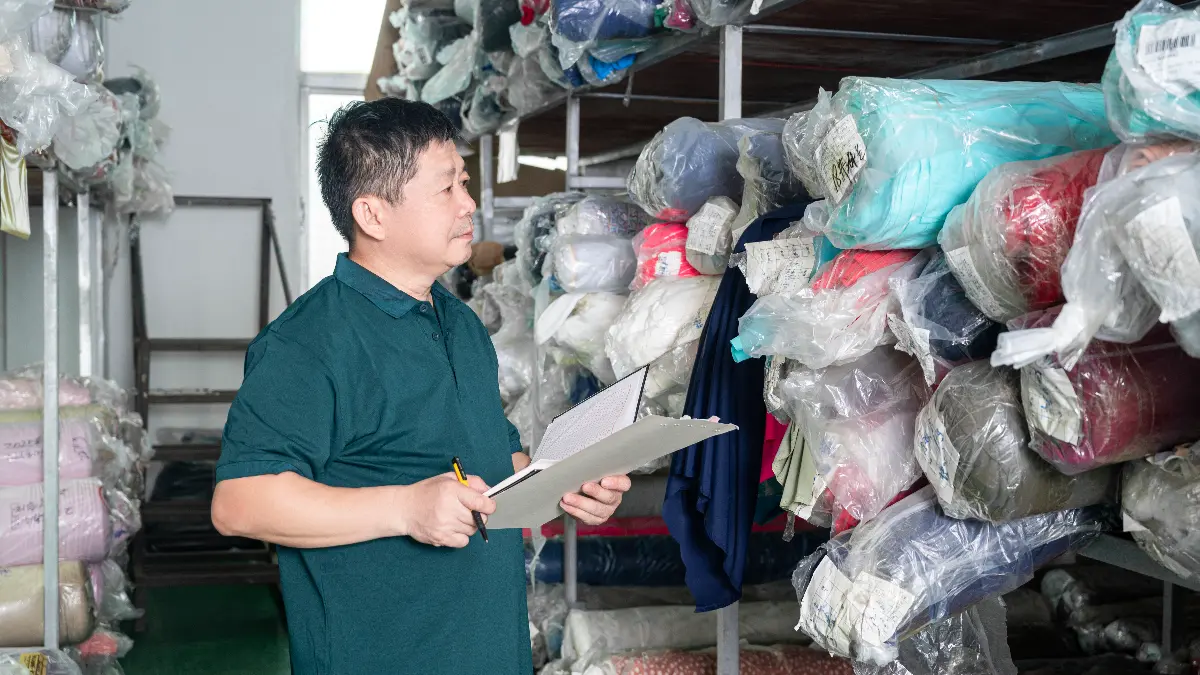
Monthly capacity, stated in pieces, tells you where your order sits in the factory’s priority queue. A plant producing 100,000 pieces per month treats a 500-piece order as routine scheduling. A plant producing 10,000 pieces treats the same order as a significant share of its monthly output — and any delay ahead of you pushes your delivery date. Ask for the number in writing and cross-reference it against the production line count. Three lines with 150 sewing operators and roughly 200 machines produce at a different cadence than a single-line workshop. The numbers should be internally consistent; if they are not, the capacity claim is marketing, not math.
2. Workforce Size and Skill Composition
Total headcount matters less than the ratio of skilled sewing operators to support staff. A factory with 150 sewing workers across three dedicated production lines has depth — when one line falls behind, the others absorb the pressure without stopping. A factory with 20 total employees and no dedicated QC team has none of that buffer. Ask how many operators work on swimwear specifically versus general apparel. Swimwear demands stretch-fabric handling, lined construction, and trim attachment precision that generic garment workers do not develop automatically. The answer separates swimwear specialists from factories that added bikinis to their catalog last quarter.
3. Equipment Count and Facility Scale
A 3,200-square-meter facility with dedicated cutting, सिलाई, packing, and storage areas signals a manufacturer that controls its own production end to end. Around 200 machines across multiple lines means the factory can run parallel production on different styles simultaneously — critical when your order shares the calendar with other brands’ peak-season programs. Visit photos or request a live video tour. Count the machines you see. A factory claiming 200 units but showing two dozen in a video is telling you something about the remaining 176.
Quality Assurance Systems
4. Five Standard Lab Tests
Export-grade swimwear passes through five recurring test types, and every one should produce a written report on accredited lab letterhead. Garment tests cover composition, shrinkage, और रंग स्थिरता. Lead tests detect heavy metals in coatings and metal trims — a CPSIA requirement for the US market. Flammability testing verifies fabric ignition behavior. Phthalate tests measure plasticizer content in soft trims, relevant for EU REACH compliance. Pull tests measure the attachment strength of every trim, cord, and hardware piece, and they matter double for children’s swimwear where a detached component is a recall event rather than a defect rate. Ask your supplier which lab runs these tests and request sample reports before committing. For a deeper look at how inspections map to production stages, see the manufacturing and QC process.
5. In-House Inspection Checkpoints
Lab tests verify materials; in-house inspections verify the process. A structured QC system runs at three points: internal fabric inspection before cutting, in-line inspection during sewing, and final inspection before packing. The best factories also operate needle detection machines on every finished garment, producing needle-detection reports that travel with the shipment. Ask which of these checkpoints generate documents you will receive. A supplier that says “we inspect everything” but cannot show you an inspection template or a sample report is describing an intention, not a system.
6. Certification Verification
OEKO-TEX Standard 100 covers harmful substances in textiles. GRS certifies recycled content chains. BSCI and SEDEX audits cover social compliance. Each is valuable; none is automatic. Request certificate numbers and validate them directly against the issuing bodies’ databases. Expired certificates, certificates issued to a different factory, and certificates borrowed from a partner company are all documented patterns in export manufacturing. If a supplier hesitates when you ask for the certificate number, treat that hesitation as data. For broader context on what the market requires, the swimwear product knowledge guide covers fabric and quality standards in detail.
Commercial Terms and Transparency
7. Pricing Structure and Transparency
A transparent supplier provides a cost breakdown: fabric, sewing labor, trims and labels, QC overhead, and margin — each as a line item. A supplier who refuses to break out the cost is hiding where the next argument will happen. When you eventually ask for a price reduction, the only honest response is “we cut the fabric grade,” because that is the only layer left to shrink without your knowledge. Request the breakdown upfront. Suppliers who provide it are signaling that there is nothing in the quote you would object to if you saw it clearly. For a complete walkthrough of how these layers stack, the B2B swimwear sourcing guide covers the full cost structure.
8. Sample Policy and Fees
A sample fee of roughly $50 per style, refunded against your first bulk order, is the healthy pattern. It proves the factory charges honestly for sampling time and returns the cost once the relationship becomes real. Repeat customers typically receive samples free. Treat permanently free samples as a pricing signal — the cost does not disappear; it migrates into the bulk unit price with a margin on top. Equally important is sample turnaround time. A factory that delivers samples in 7–10 days operates with organized pattern rooms and available sewing capacity. One that quotes 20–30 days for a sample is either overloaded or disorganized — neither trait improves after you place a deposit.

9. Lead Time Benchmarks
Lead time separates organized factories from optimistic ones. Capable swimwear manufacturers deliver samples in 7–10 days and complete bulk orders under 1,000 pieces in roughly 30 दिन. The industry norm runs 20–30 days for samples and 50 days for bulk — a gap that reflects scheduling discipline, not just sewing speed. Ask for the lead time in writing, tied to a specific order quantity, and confirm what triggers the clock. Does production day one start when the deposit clears or when the PP sample is approved? The answer determines whether your “30-day” delivery is actually 45 days from the moment you expected it.
10. Payment Terms
The standard structure is a telegraphic transfer split — deposit on order confirmation, balance against shipping documents. Never release a balance payment before inspection results are in hand. A supplier who demands full payment before shipping is removing your only leverage for quality resolution. The commercial flow should run: order confirmation, deposit receipt, उत्पादन, final inspection, balance payment, then shipment. If a supplier proposes a different sequence, ask why — and compare their answer against the standard pattern.
Communication and Verification
11. Communication Speed and Technical Depth
Measure response times from the first email. A supplier that answers technical questions in four hours during vetting will behave the same way during a production problem. One that takes three days to return a fabric swatch confirmation will take three weeks to resolve a bulk defect. Equally important is the depth of the answers. Ask a specific technical question — “What is the shrinkage rate on your 85% नायलॉन / 15% elastane blend after five wash cycles?” — and compare the response against vague reassurances. Technical depth during vetting predicts technical depth during production. Surface-level answers now become surface-level solutions later, when the stakes are measured in cartons, not emails.
12. References and Factory Visits
Request at least two references from brands currently buying in your target market. A supplier serving European brands understands different testing requirements and quality expectations than one serving only domestic buyers. Then visit the factory in person if possible. Walk the production lines. Count the machines. Check the storage conditions for fabric rolls. Look at the QC station — is it staffed and active, or is it a table with a sign? If a physical visit is not feasible, request a live video tour with real-time answers to specific technical questions. A recorded video is a brochure; a live walkthrough where the camera operator cannot prepare is evidence.

Red Flags That End the Conversation
Certain patterns should stop your evaluation immediately. A supplier who refuses to provide a cost breakdown has something to hide inside the number. One who cannot produce test reports from an accredited lab is either new to export or circumventing testing entirely. Vague answers about certification status — “we are applying” या “our partner factory has it” — are not the same as holding a valid certificate. Quotes sitting far below every competing bid are not discoveries; they are forecasts of fabric substitution or skipped inspections. And a supplier who pressures you to skip the sampling stage to “save time” is telling you that what comes out of the sample room would not survive your scrutiny. Each of these red flags has appeared in documented buyer-supplier disputes. None of them is worth gambling a production budget on.
Vet Your Swimwear Supplier With a Factory That Proves It
From 1-piece MOQs to 100,000-piece monthly capacity, five lab tests and full QC documentation come standard — request the reports before you commit.
1-piece MOQ | 7–10 day samples | ODM & OEM
Start Your Swimwear Order →अंतिम विचार
The right manufacturing partner can make product development more predictable, from the first sample to repeat production. A thorough supplier review helps you assess not only technical capability, but also whether a factory can meet your quality expectations, production requirements, and brand standards over time. These factors can reduce avoidable production issues and create a more stable foundation for future collections.
एएसजी फैशन provides custom swimwear manufacturing, OEM, ODM, and private label services for brands developing new collections or expanding existing product lines. Contact our team to discuss your requirements, review your swimwear tech pack, and find a production solution that fits your brand.
अक्सर पूछे जाने वाले प्रश्नों
How do I find a reliable swimwear manufacturer?
To find a reliable swimwear manufacturer, start by defining your product needs, quality standards, and target MOQs. Search on specialized B2B platforms, attend industry trade shows, and seek referrals. Screen candidates for specific swimwear expertise in stretch fabrics, seam construction, and print quality. Verify their credibility by requesting certifications, asking for a live video tour of their facility, checking client references, and ordering samples to evaluate their workmanship and fit before committing to a bulk order.
How long does it take to manufacture swimwear?
The typical end-to-end timeline for swimwear manufacturing is 6 को 12 weeks from order confirmation to final delivery. This includes about 2–4 weeks for pre-production (sampling, fit approvals, कपड़े की सोर्सिंग), 20–45 days for bulk production, and additional time for quality control, packing, and shipping. Repeat orders are often faster, around 4–6 weeks, since patterns and materials are already approved.
What certifications are important for a swimwear manufacturer?
Key certifications demonstrate a manufacturer’s commitment to quality, safety, and ethics. Look for ISO 9001 for quality management systems. For chemical safety, which is critical for skin-contact garments like swimwear, OEKO-TEX STANDARD 100 is essential. If you plan to use recycled materials, the factory must have GRS (Global Recycled Standard) certification with valid Transaction Certificates. A social compliance audit like BSCI or SA8000 verifies ethical labor practices.
How can I verify a swimwear manufacturer before placing an order?
Verify a manufacturer by conducting thorough due diligence. Request their business license and key certifications, then check the certificate numbers in the issuing body’s public database. Ask for a live video walkthrough of their production lines, cutting room, and QC stations. Order and test physical samples to assess fit, fabric quality, and construction. Finally, check their export history and ask for references from brands in a similar market.